GUEST: Sarp Renk Özer
Friday, 18/9/2026., 19:00 h
Multimedijalni institut MaMa, Preradovićeva 18, Zagreb
As part of the program Remember Freedom, we host in Zagreb curator and artist Sarp Renk Özer, who prepared a screening with the emphasis on the artists who use archival research to confront state repression and the omissions it leaves in the record.
State archives enforce the conditions under which the past appears in public. By staging an aura of objective consensus, official historiography renders state violence neutral and its atrocities unnamable. Counter-memory operates as an evidentiary intervention against the politics of silencing, erasure, and repression. Spanning Turkey’s social and political landscape from the late twentieth century to the present, this screening program borrows its title from Cana Bilir-Meier’s work This makes me want to predict the past, bringing together film and video works that set out to write history from below. Vernacular reels, personal testimonies, suppressed recordings, and witnesses’ bodies destabilize the state’s monopoly on facticity and public memory. The works in the program employ the archive as an active, situated, and present-tense body of counter-evidence.
The screening will include excerpts from the following films: Memory of a Square by Gülsün Karamustafa, State Lesson and Fata Morgana by Ege Berensel, Do All Daddies Have Gray Suits? by Aylin Tekiner, To Thread Air by Hande Lara Sever, Ayhan and Me and What Remains by Belit Sağ, Columns and Cracks by Hasan Özgür Top and This Makes Me Want to Predict the Past by Cana Bilir Meier.
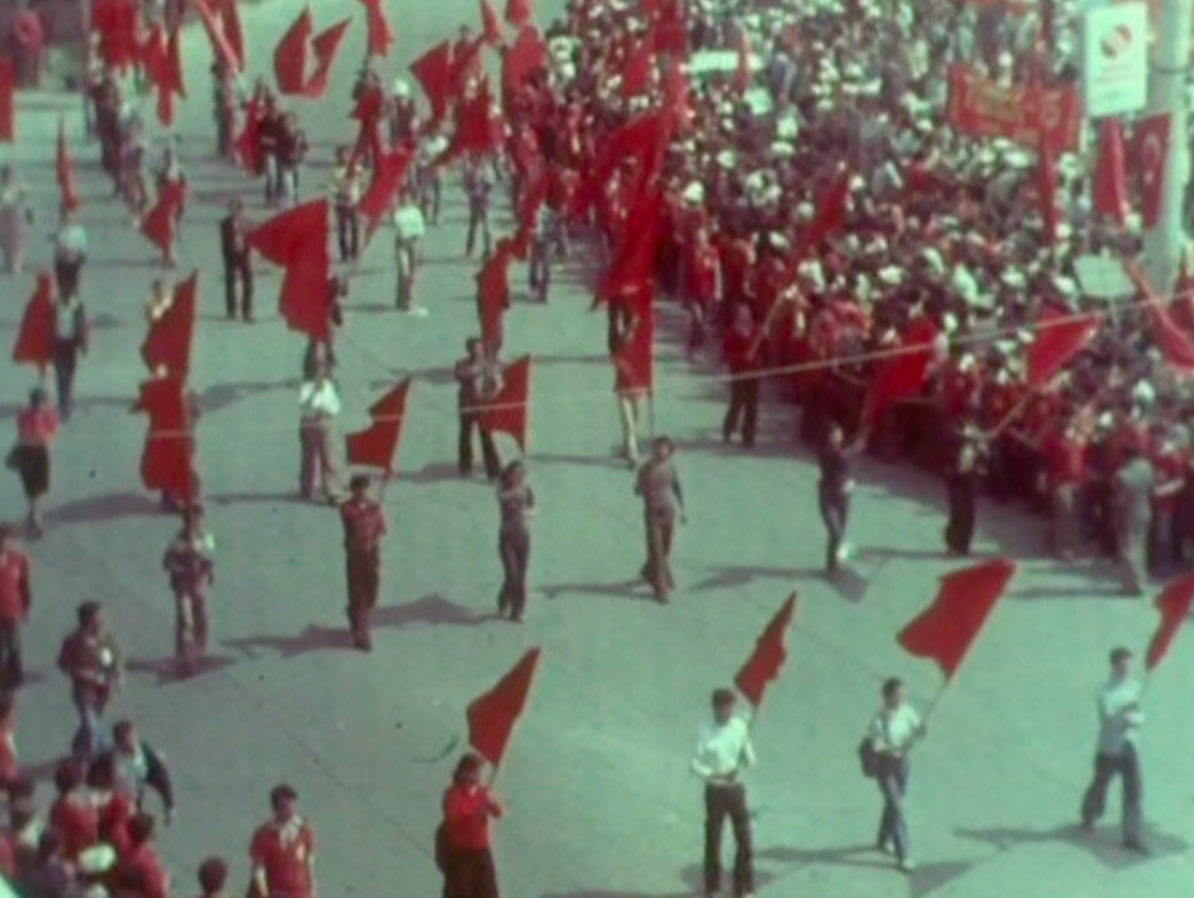
Gülsün Karamustafa, Memory of a Square, 2005.
A two channel video work. On one screen we see a family in an interior, and the documentary footage on the other screen can be related to this family’s daily life, covering a timeline running from the 1930s to the end of the 1980s and marking events that took place in a square. The work carries no commentary, and no time or event appearing on screen is identified.
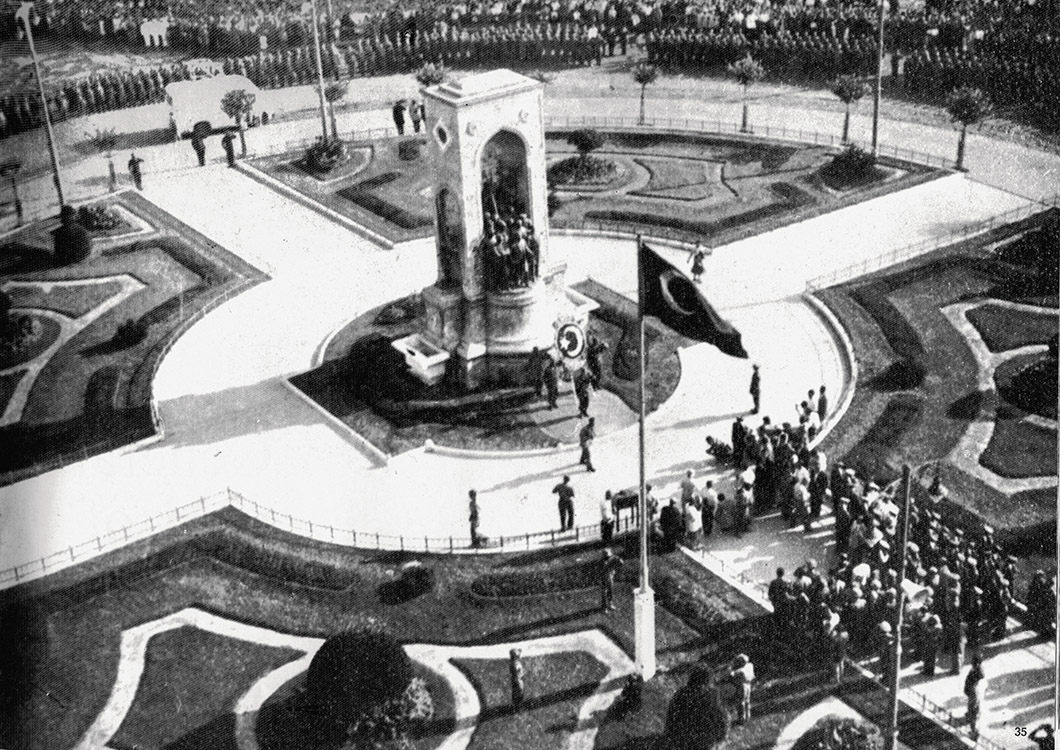
Ege Berensel, State Lesson, 2015.
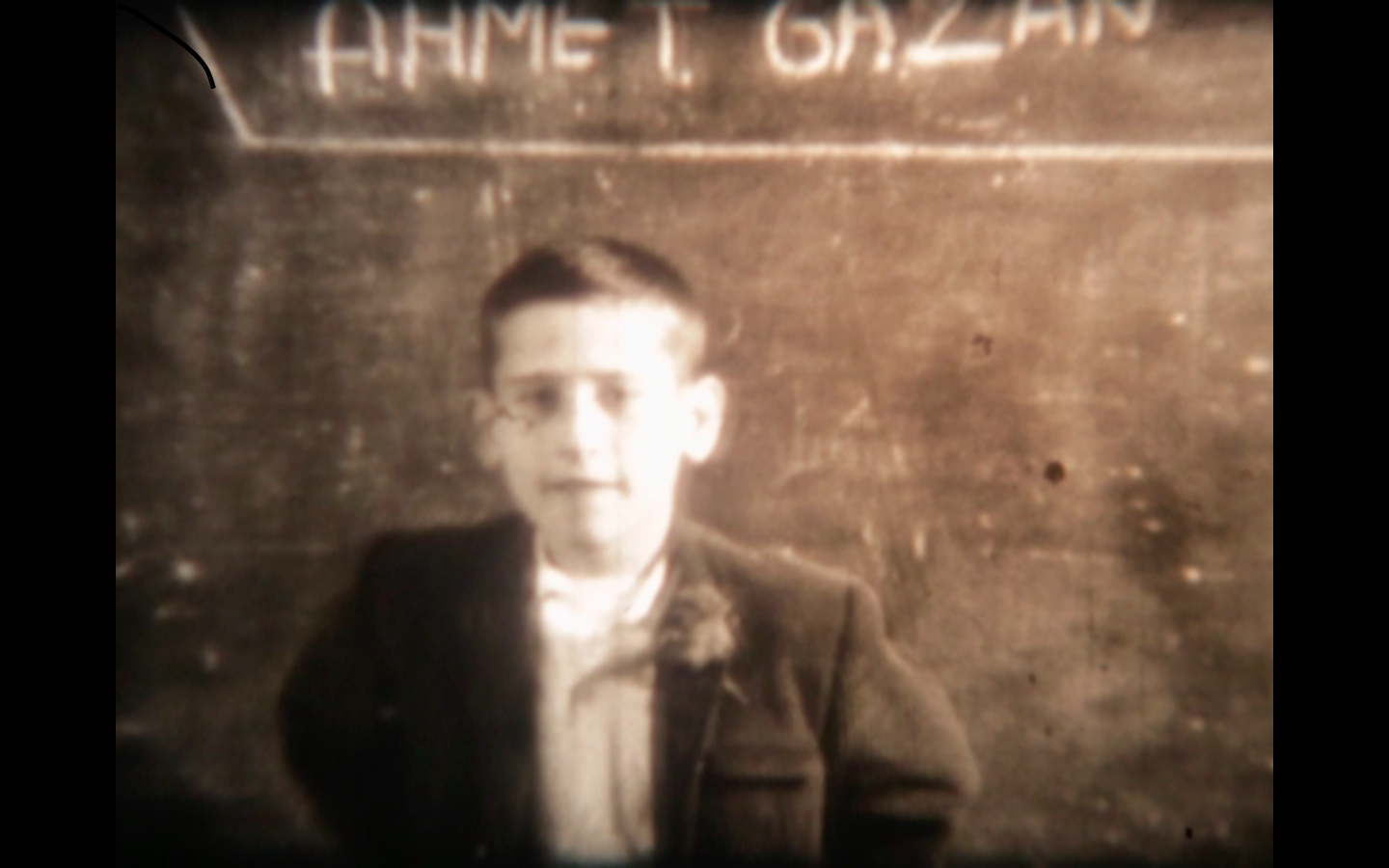
In the 1960s, a teacher assigned from the western part of the country to a primary school in a village with no road completed their compulsory service and used an 8 mm camera to record the students writing their names on the blackboard and standing at attention. The camera captured the outcome of how school disciplines bodies through teaching and imposes a series of predefined gestures. Writing names on the board, standing at attention, holding the head high, drawing the shoulders back and bringing the feet together create obedient bodies by putting bodies and gestures into relation. Bodies turn into objects and targets of power, and out of a body without form or skill a machine comes into existence, subdued and ready for use. What is remembered becomes the memory of the disciplined bodies rather than their images and names. The list embedded at the end of the film gives the names of children who died in the war in the region after the 1990s, children who now have no bodies and consist only of names and statistics.
Ege Berensel, Fata Morgana, 2019
Part of the three channel video installation Women’s Films, alongside March of Women and Piecework. Fata Morgana follows the story of thirty lost 8 mm reels belonging to a militant filmmaker who had changed her address and fled the country after the coup on 12 September 1980. The films were never delivered to her and remained in the possession of the state postal service (PTT). The artist acquired them decades later, when PTT auctioned off mail that had gone undelivered for more than thirty years. The work traces the process of returning these films to their owner while unpacking the contents of the reels.
Aylin Tekiner, Do All Daddies Have Gray Suits?, 2016
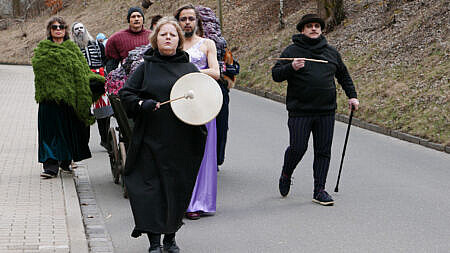
Drawing on autobiographical events and narrated from the point of view of a little girl who witnessed her father’s assassination, this memory play combines live shadow performance with video projection. Performers cast shadows and carry the story through body language, costume and masks, staging it as the child understood it. The events are real, and the narrative renders them as a tale with surreal characters. Experimental music and voiced narration run alongside the projection. Cinema, physical performance, puppetry, shadow work and animation move through one another to enact the girl’s interpretation.
Hande Lara Sever, To Thread Air, 2019
Sever began developing To Thread Air after coming across archival remnants of a White House ceremony in which Kenan Evren, the right-wing leader of the 1980 Turkish coup, was awarded the Legion of Merit by President Ronald Reagan. The relationship between these two political figures and their mutual exonerations forms the backbone of the work, which interrogates how artistic and creative practices are manipulated to falsify information and rewrite historical events for personal and political gain. The film essay draws a parallel between Reagan’s acting career, including his involvement in the US Army Air Forces First Motion Picture Unit, and Evren’s post-retirement career as a painter. It examines how creativity can be wielded as a tool for revisionism and redemption by perpetrators of violence. By juxtaposing Evren’s career as a painter with his repression of dissident artists during the coup, the work revisits the sites where public sculptures by politically engaged artists in Turkey were removed or destroyed due to their creators’ involvement in progressive political movements.
Belit Sağ, Ayhan and Me, 2015
Unpacking the series of events that took place during its own production, the video examines the power of images and the relationship between art and state control. The work began as a video about Ayhan Çarkın, a member of a death squad responsible for the murder of at least a thousand Kurds, who eventually made a public confession that was quickly buried. When Sağ’s work was censored by the commissioning art institution, the artist turned the censorship itself into the subject. The result examines how images are kept out of sight, how prohibition is internalized as self-censorship, and how the erasure of recent history acquires a veneer of good reason.
Belit Sağ, What Remains, 2018
Constructed from images that Sağ shot and gathered during 2015 and 2016 in Cizre, a primarily Kurdish town in Turkey on the Syrian border, together with found footage from across Turkey from the same period. A focus of the work is the artist’s footage of collective Kurdish mourning practices, and how images of the dead are used in these practices.
Hasan Özgür Top, Columns and Cracks, 2025
Columns and Cracks speaks through the literal and figurative construction of national myth. During the general elections in May 2023 the Turkish government decided to dock a new drone warship at the quay just downhill from the Hagia Sophia in Istanbul. The weight of this toy elevated to mobile temple becomes an integral part of how the fate-obsessed wounded masculinity of Arabesk music is scaled up to national mythology. As the immovability of the columns of deep histories are used as canvases for present day powers, they crack up at home. What is the fugitive route when the mythological architecture cuts through the total sum of the social in a city?
Cana Bilir-Meier, This makes me want to predict the past, 2019

The film portrays a group of migrant teenagers at Munich’s Olympia shopping centre, where nine immigrant youths were murdered during a racist attack in 2016 and many people were seriously injured. The camera follows two young teenagers in their daily exploration of the shopping mall while they address their dreams and hopes as well as their fears and nightmares. Fiction and reality are mixed together throughout. Scenes from Erman Okay’s 1982 play Düşler Ülkesi (Land of Dreams), which the artist’s mother Zühal Bilir-Meier, a youth and children’s behaviour therapist and pedagogue, co-directed and performed in, are taken up and blended across different time levels.

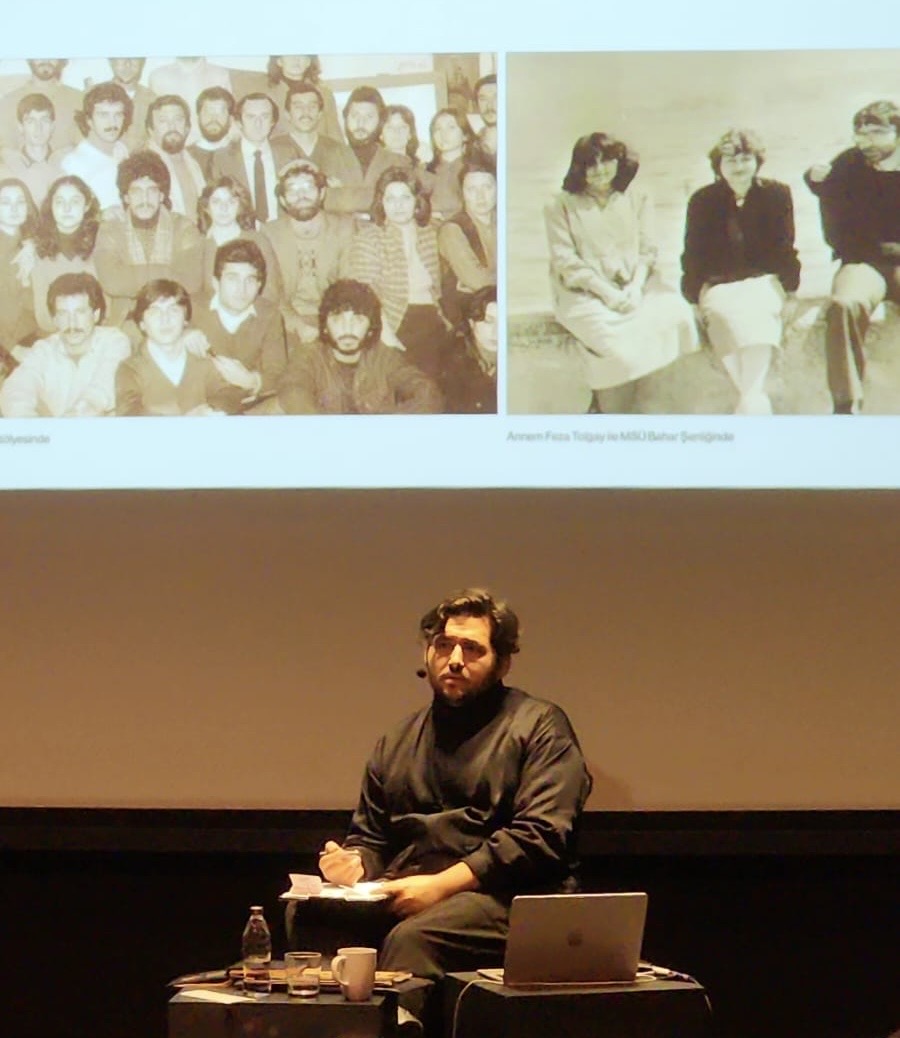
Sarp Renk Özer is a curator and artist based in Istanbul. His practice is shaped by archival research into public memory and the history of art in Turkey, with a particular focus on the role and function of politics in the history of art education in the country. He has been running the independent cultural organization AVTO since 2017. His curatorial work has been presented at the 17th Istanbul Biennial, Depo Istanbul and State of Concepts, Athens. A recipient of the 2026 Salt Research Fund, he has contributed to publications by L’Internationale and the Institute of Network Cultures. He is a member of de Appel’s 2027 Curatorial Programme cohort.
This talk will take place under the larger umbrella of WHW’s discursive framework, Remember Freedom. Launched in 2025, this program draws its inspiration from a 2014 speech in which Ursula LeGuin urged society to tend to its artists – ˝the realists of a larger reality.˝
The program will be held in English. All films are screened by the courtesy of the artists.
Many thanks to MaMa for their hospitality.
The program is supported by:
Office for Culture and Civil Society of the City of Zagreb
Kultura Nova Foundation