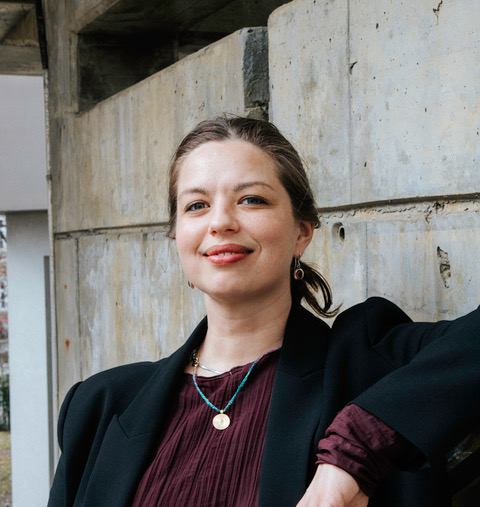
GUESTS: Rose-Anne Gush and Antonia Majaca
Friday, 03/07/2026., 7:30 h
Multimedijalni institut MaMa, Preradovićeva 18, Zagreb
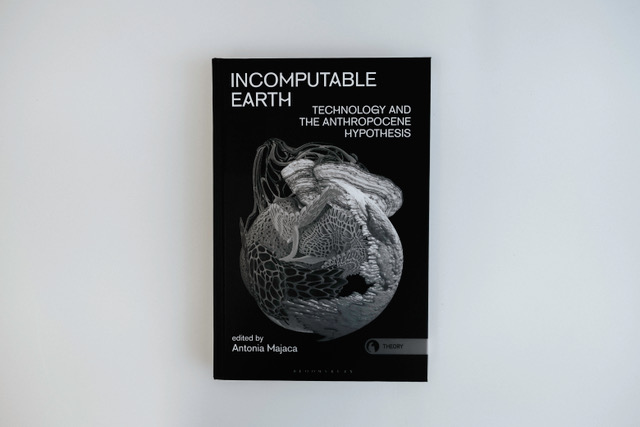
In this conversation, Rose-Anne Gush and Antonia Majaca will read two chapters from the recent book Incomputable Earth: Technology and the Anthropocene Hypothesis (Bloomsbury, 2026): Antonia’s introductory text, “Incomputable Earth: Reclaiming Abstraction,” and “Externality and Necessity: Between Materialism and Ecology” by Marina Vishmidt (1976–2024). Both chapters approach the same problem from different angles. Marina traces externality as intrinsic to capitalist accumulation, arguing that the unwaged, the de-valorized, and the discarded are actually constitutive of the value cycle, rather than residual to it. She is suspicious of emancipatory projects that try to make capital account for everything (such as carbon accounting, for example), since this kind of recognition can extend the commodity frontier instead of refusing it. Antonia’s “incomputable” names the relational, place-based, and reproductive knowledges that cannot be registered within Earth System Science and its cybernetic ancestors, and asks how to mobilize these remainders. Reading the two texts together considers the more affirmative gestures of “Reclaiming Abstraction”—the companion-planting epistemology, “decapitalized humanism,” the call for an alternative Earth science—by way of Marina’s commitment to negation, antagonism, and abolition as the actual form of emancipatory politics.
Marina had collaborated with Antonia on conceptualizing Incomputable Earth and was to be its co-editor before her illness returned. The conversation is dedicated to her work and her memory.
Rose-Anne Gush is an art historian and theorist, as well as a sporadic artist and curator. Her research critically investigates the political aesthetics of “global art” and its discourses, feminist Marxist theories, and the politics of artistic labor, focusing on the body; political ecologies and geographies of extraction and liberation; and the connections between antifascism and anticolonialism. She is currently Assistant Professor at IZK – Institute for Contemporary Art at TU Graz, Austria. In 2025, she co-organised the conference What is Infrastructural Critique?, a conference in celebration of the life and work of Marina Vishmidt. The proceedings of this event can be found in issue 41 of Arts of the Working Class. Her recent articles have appeared in the Nordic Journal of Aesthetics, e-flux, Arts of the Working Class, Camera Austria International, Berlin Review, and FKW // Zeitschrift für Geschlechterforschung und visuelle Kultur. Her first monograph, Artistic Labour of the Body, was published in 2026 as part of Brill/Haymarket’s series ‘Historical Materialism.’
Antonia Majaca is a Research Fellow in the Department of Philosophy and Cultural Heritage at Ca’ Foscari University of Venice, Italy. Her research within the ERC-funded HealthXCross project examines political epistemology of modern and contemporary technoscience through decolonial feminist and historical materialist analysis. She founded and coordinates the research cluster “Radical Epistemologies: Political Ecology and Transversal Praxis” at the Ca’ Foscari’s NICHE Centre for Environmental Humanities. She was Principal Investigator of the Austrian Science Fund (FWF) artistic research project “The Incomputable,” which gave rise to the recently published volume Incomputable Earth: Technology and the Anthropocene Hypothesis (Bloomsbury, 2026). She has directed research, curatorial, discursive, and publishing projects for Documenta 14, the Venice Biennale, Berlin Biennale, and HKW Berlin.
Many thanks to Multimedijalni institut MaMa for their hospitality.
The program is supported by:
Office for Culture and Civil Society of the City of Zagreb
Kultura Nova Foundation